Pistachio pollination biology and artificial pollination
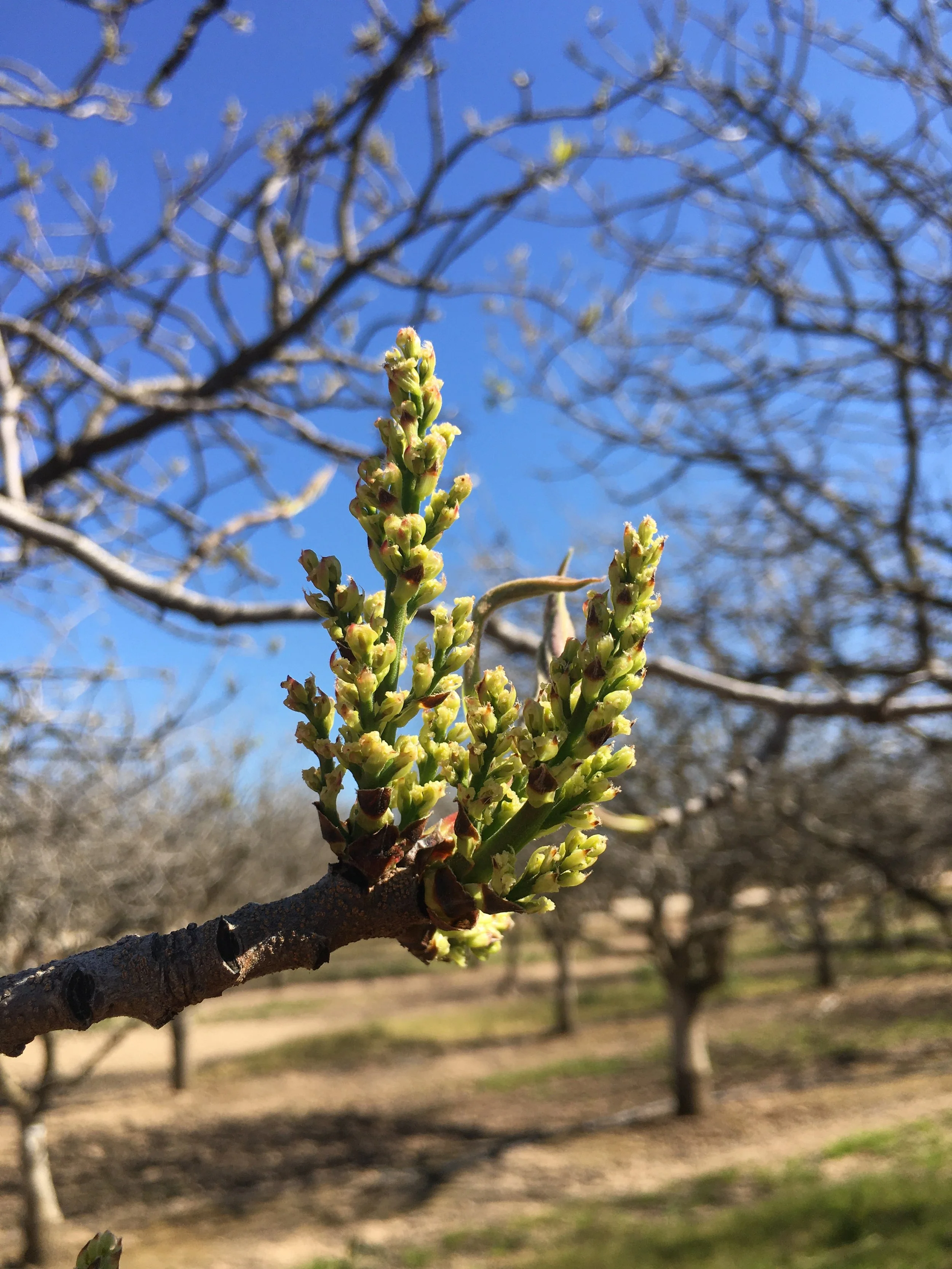
Phoebe sits down with Elizabeth Fichtner to discuss the biology of pistachio bloom, how it impacts orchard design, and why picking the correct male pollinator is so important. She also goes over the research on artificial pollination of pistachio and why it may only be useful in very specific circumstances. In this episode, Elizabeth mentions that dust can cause parthenocarpy in pistachios; we posted an episode on this a few years ago.
Find out more about upcoming meetings in the San Joaquin Valley (scroll to the bottom) and the Sacramento Valley!
The views, thoughts, and opinions expressed are the speaker’s own and do not represent the views, thoughts, and opinions of the University of California. The material and information presented here is for general information purposes only. The "University of California" name and all forms and abbreviations are the property of its owner and its use does not imply endorsement of or opposition to any specific organization, product, or service.
Follow us on Twitter! @SacOrchards and @SJVtandv
Thank you to the Almond, Pistachio, Prune, and Walnut Boards of California for their kind donations. Thank you to Muriel Gordon for the music.
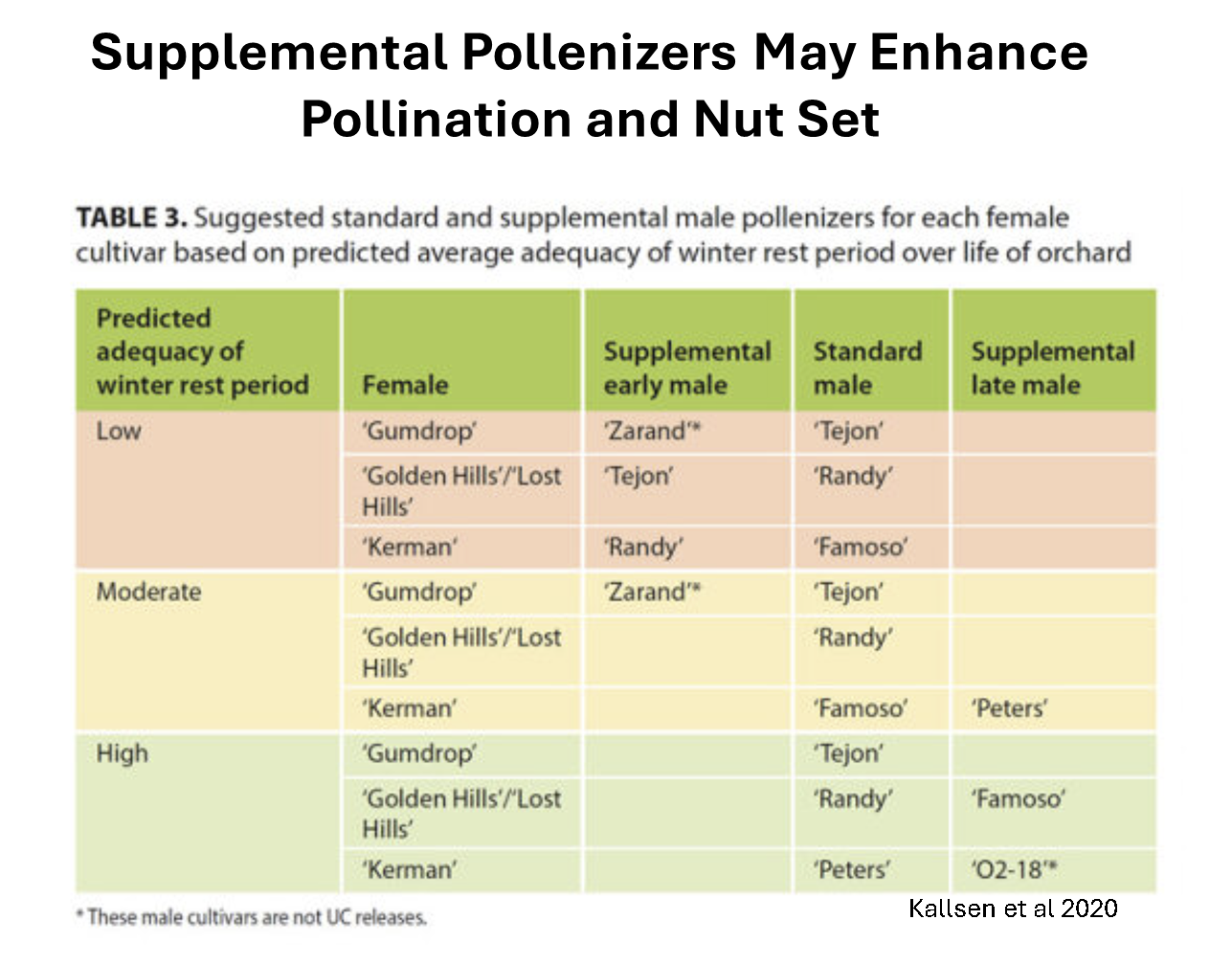
Pollenizers to pick for good bloom overlap with pistachio female cultivars. Courtesy of Craig Kallsen, a retired orchard advisor for Kern County